Thinking about adding an accessory dwelling unit to boost cash flow in University Place? You are not alone. Investors and house hackers across Pierce County are exploring ADUs to create income, support multigenerational living, or increase resale value. In this guide, you will learn the first steps to confirm feasibility, a simple cash flow model you can run in a spreadsheet, how to set realistic rent and vacancy assumptions, and exit strategies to protect your long-term return. Let’s dive in.
Start with local feasibility and permitting
Before you run numbers, confirm you can build what you want on your lot in University Place. Local zoning and building rules drive size, placement, parking, and even how you operate the unit. A short feasibility check upfront saves months of redesigns and cost overruns later.
Confirm zoning and allowed ADU types
Start by identifying your zoning district and which ADU types are permitted on your parcel:
- Attached ADU that is connected to the main home.
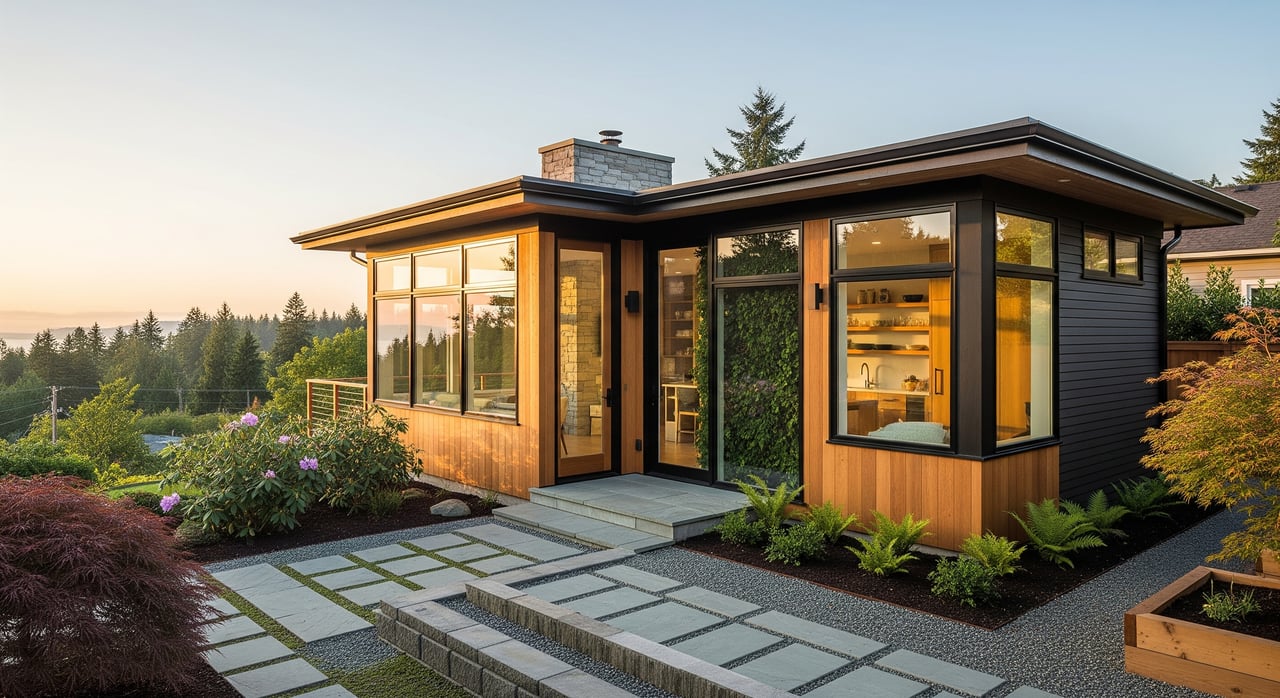
- Detached ADU, also called a detached accessory dwelling unit (DADU).
- Internal conversion of existing space such as a basement or garage.
Verify that your preferred ADU type is allowed in your district and whether any parcel-specific overlays apply.
Check lot size, setbacks, size and height
Rules can limit how large your ADU can be and where it sits on the lot. Confirm:
- Minimum lot size and any minimum lot width that could affect a DADU.
- Setbacks for front, side, and rear yards that control footprint and placement.
- Maximum lot coverage and total impervious area.
- Height limits for accessory structures and the maximum ADU square footage.
These standards determine whether a detached unit fits and what design is realistic.
Clarify parking, occupancy, and rental limits
Ask planning staff whether off-street parking is required for an ADU and if on-street parking can satisfy the rule. Confirm any owner-occupancy requirements. If you plan to use short-term rentals, verify whether they are restricted or require registration. Long-term rentals often provide steadier occupancy, but local rules should guide your plan.
Map utilities and connection rules
Utility connections can be a major line item. Confirm whether you need separate meters or can use shared service, and ask about sewer and water connection or tap fees. On some lots, capacity or access can be a constraint, so clarify early with the city and utility providers.
Use local sources for definitive answers
Lean on the City of University Place Planning Division and Municipal Code for zoning and ADU rules. Pierce County property records and the Assessor can help you understand parcel constraints and how new improvements are assessed. The city’s building permit counter can provide permit checklists, fees, and current processing times. For state-level guidance, the Washington State Department of Commerce publishes ADU resources that summarize laws affecting local rules.
Plan your permit path and timeline
Most ADU projects follow a similar process:
- Schedule a pre-application meeting with city planning to clarify code interpretation and site constraints.
- Prepare design documents such as a site plan, floor plans, elevations, and structural drawings for a detached unit.
- Submit for building permit and plan review for structural, mechanical, electrical, and plumbing.
- Complete inspections during construction and secure final occupancy.
Expect weeks to a few months for plan review depending on scope and backlog. Interior conversions can build out in a few months. Detached units can take several months. City staff can provide current timing.
Build a cash flow model that holds up
Once feasibility is clear, you can build a simple model to estimate cash flow, cash-on-cash return, and payback period. A spreadsheet keeps assumptions transparent and lets you run different scenarios.
Gather core inputs for your model
Create input cells for the following items:
- Acquisition price or existing home value basis.
- Hard construction costs per square foot times ADU area. Distinguish attached and detached costs.
- Soft costs including design, engineering, permit and impact fees, and utility connection fees.
- Financing terms such as interest rate, points, loan term, percent financed, and construction interest during the build.
- Rents. Use realistic market rent for the unit type and size.
- Vacancy and credit loss. Start with conservative assumptions.
- Operating expenses attributable to the ADU such as utilities you pay, insurance, maintenance, property management, incremental property taxes, and any HOA adjustments.
- Exit costs such as broker commissions and closing costs.
Keep your inputs on one tab and your outputs and formulas on another tab for clarity.
Use straightforward formulas for clear outputs
Model the core performance metrics with simple math:
- Gross rental income = monthly rent × 12.
- Effective gross income = gross rental income × (1 − vacancy rate).
- Operating expenses = effective gross income × expense ratio or a detailed line-item total.
- Net operating income (NOI) = effective gross income − operating expenses.
- Annual debt service = annual mortgage payment associated with ADU financing.
- Cash flow before taxes = NOI − debt service.
- Cash-on-cash return = annual cash flow before taxes ÷ cash invested.
- Cap rate (for comparison) = NOI ÷ total property value or purchase price plus ADU cost.
- Payback period = cash invested ÷ annual cash flow before taxes.
If you are using a mortgage calculator, apply the standard payment formula for the annual debt service based on rate, term, and loan amount.
Consider financing paths that fit your plan
Different financing routes change your cost of capital and risk profile:
- Cash. Fast and simple, but ties up capital.
- Home equity loan or HELOC. Common for owner-occupants adding an ADU. Often variable rates and interest only during the draw period.
- Cash-out refinance. Replaces your existing mortgage with a larger loan that covers ADU costs. Factor closing costs and a reset loan term.
- Construction loan. Useful for larger detached ADUs. Interest accrues during the build then converts to a permanent mortgage.
- Investor loans. Conventional or portfolio options with different down payment and rate structures.
If you expect to hold long term, compare total interest cost and flexibility. If speed is your priority, weigh the simplicity of cash or HELOC funds against rate risk.
Model realistic rents for University Place
Reliable rent assumptions make or break your model. Ground your numbers in the local market and unit specifics.
Find rent comps and vacancy trends
Gather data from multiple sources to triangulate a realistic rent range:
- Local rental listings filtered for ADUs or small detached homes in University Place and adjacent Tacoma neighborhoods.
- Rent reporting services that publish local medians.
- Local property managers who handle single-unit rentals and can speak to rent ceilings and typical vacancy.
- U.S. Census American Community Survey five-year estimates for context on median gross rent trends at the city or county level.
Cross-check your findings and be conservative when setting your pro forma rent.
Adjust for amenities, utilities, and turnover
Unit attributes influence achievable rent and operating costs:
- Detached ADUs often command higher per-square-foot rent than internal conversions.
- Furnished units can earn more but bring higher turnover and operating costs.
- If you pay utilities, reduce your net income accordingly or install separate metering where allowed.
- If you are considering short-term rentals, confirm local regulations and factor platform fees and higher vacancy. Long-term leases usually offer steadier cash flow.
Document each assumption and justify it with at least one local data point or expert opinion.
Cover taxes, insurance, and operating realities
Build in the ongoing costs that come with a rental unit so your numbers reflect reality.
Expect changes to assessed value and taxes
Adding an ADU typically increases your assessed value. Contact the Pierce County Assessor to understand how improvements are assessed and when the change will hit your bill. Washington has no state income tax, but rental income is subject to federal income tax and may be subject to state or local business taxes. Work with your tax professional on depreciation and deductions for a full after-tax picture.
Update insurance and plan for maintenance
Notify your insurer when you add a rental unit so your coverage reflects landlord risk. You may consider a landlord policy or umbrella liability. Budget a maintenance reserve. Some investors set aside 5 to 10 percent of effective gross income or a fixed annual amount per unit for ongoing repairs.
Decide on management and compliance steps
If you self-manage, account for your time. If you hire a property manager, fees often range from about 8 to 12 percent of collected rent for long-term leases. Confirm your unit meets building code requirements for safety features such as egress, smoke and carbon monoxide alarms, and any required fire separation. Review Washington landlord-tenant laws for deposits, notices, and required disclosures.
Run sensitivity so you are not surprised
A good model tests your assumptions. Build three scenarios and see how outcomes change.
Set up conservative, base, and aggressive cases
Run variations on the inputs that move the needle most:
- Rents: vary by plus or minus 10 to 20 percent.
- Vacancy: test a 5 to 10 percent range.
- Construction costs: increase and decrease by 15 to 30 percent.
- Financing: shift interest rates by 1 to 2 percent.
Track how cash-on-cash return and payback period change in each case. This helps you make decisions on design scope, rent strategy, and financing structure before you commit.
Think ahead to exit and resale value
An ADU can widen your buyer pool and affect resale pricing. Model your upside, but keep expectations grounded in local evidence.
Know who buys ADU properties
Homes with ADUs can appeal to:
- Investors who want duplex-like cash flow without multifamily financing.
- House hackers who plan to live in one unit and rent the other.
- Multigenerational buyers seeking space for relatives.
- Buyers who value income potential as an amenity.
Marketing and presentation should highlight permitted status and clear income potential to reach these groups.
Use practical valuation approaches
Most appraisals lean on comparable sales. Collect recent sales in University Place or broader Pierce County that include ADUs and study the price premium. You can also cross-check with income-based measures:
- Cap rate approach: value equals NOI divided by a market cap rate for similar small residential income properties.
- Gross Rent Multiplier: a quick check using property price divided by gross annual rent.
If the ADU is fully permitted and documented with closed permits, buyers and lenders tend to be more comfortable, and financing is usually smoother.
Match your hold period to your goals
Short holds can work if your construction cost to value uplift is strong and you can move quickly through permitting and build-out. Remember to account for transaction costs and potential tax impacts. For most owners, a medium to long-term hold is about steady cash flow, depreciation, and long-run appreciation. Test different exit cap rates in your model to see how resale value might change with the market.
A simple spreadsheet model you can copy
Create two tabs: Inputs and Results. On the Inputs tab list:
- Parcel address and zoning.
- ADU type and square footage.
- Hard cost per square foot and total hard cost.
- Soft costs such as design, permits, and utility fees.
- Financing terms: percent financed, rate, amortization, fees.
- Monthly rent, vacancy percent, and any landlord-paid utilities.
- Operating expenses: management percent, insurance, maintenance reserve, incremental property taxes, and other costs.
- Exit assumptions for transaction costs.
On the Results tab calculate:
- Effective rent, operating expenses, and NOI.
- Annual debt service and cash flow before taxes.
- Cash-on-cash return, cap rate, and payback period.
- Sensitivity table for rent, vacancy, construction cost, and interest rate.
Keep notes beside each input on where you sourced it, such as property manager quotes, contractor bids, or city fee schedules. This discipline makes your model repeatable and easy to update.
How GQ Home Team can help
If you want to move from idea to action in University Place, you do not have to do it alone. A focused pre-application plan, accurate rent comps, and a disciplined build budget make the difference between a smooth project and a stalled one. Our team can help you identify candidate properties, coordinate early conversations with city planning and local lenders, source contractor bids, and build a clear hold-versus-sell plan tailored to your goals.
Ready to run your ADU numbers with confidence and align the plan to the University Place permitting process? Work with the local investor-minded team that treats your project like our own. Contact GQ Home Team Washington to get started.
FAQs
What is the first step to build an ADU in University Place?
- Schedule a pre-application conversation with the City of University Place Planning Division to confirm your parcel’s zoning, allowed ADU types, size limits, setbacks, parking, and utility requirements.
How should I estimate rent for a University Place ADU?
- Pull local comps for similar unit types and sizes in University Place and nearby Tacoma, consult a local property manager for rent ceilings and vacancy, and use conservative figures in your model.
What costs should I include in an ADU cash flow model?
- Include hard and soft construction costs, financing terms, vacancy, operating expenses such as management, maintenance, insurance, and incremental property taxes, and exit transaction costs.
Which financing options are common for ADUs in Pierce County?
- Owners often use cash, HELOCs, cash-out refinances, or construction loans for detached units; investors may use conventional or portfolio loans depending on goals and underwriting.
How does an ADU affect resale value in University Place?
- Value depends on buyer demand, permitted status, and local comps; support pricing with recent sales of ADU homes and cross-check with income measures like cap rate and Gross Rent Multiplier.
What vacancy rate should I use when modeling a University Place ADU?
- If you do not have local data, start with a conservative 5 to 10 percent annual vacancy assumption and run sensitivity to see how it impacts cash flow and payback.